Solar panels can produce valuable energy during the day, but a complete power system needs more than PV modules alone. It must manage solar generation, battery storage, utility power, and household loads in a coordinated way. The right hybrid inverter becomes the control center that turns these separate components into one usable energy system.
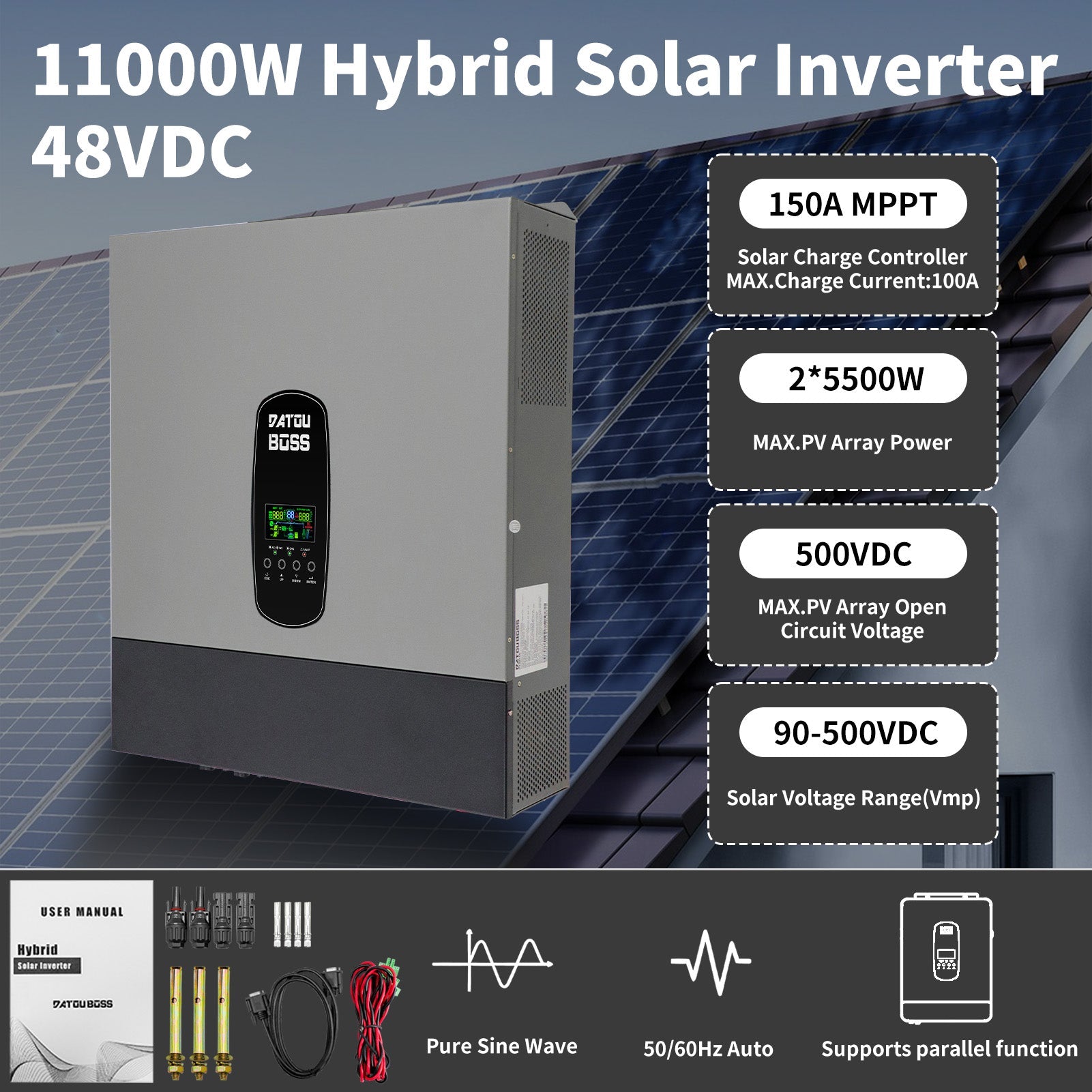
The DATOUBOSS 48V 6200W Solar Hybrid Inverter is designed for customers who want high-capacity solar conversion, battery backup, and flexible energy management in one unit. It combines a 6200W inverter platform, up to 8500W of PV input, a 120A MPPT solar charger, 230V AC output, IP54 dust and water protection, battery-free operation, BMS protection, and optional WiFi 04 remote monitoring.

Why Does a Hybrid Inverter Matter?
A conventional inverter mainly changes DC power into AC power. A hybrid inverter manages the relationship between several power sources. It can use solar energy first, charge a battery with surplus generation, draw from the grid when needed, and keep selected loads running when utility power is unavailable.
- Solar-first energy use: prioritize available PV energy for daytime loads;
- Battery storage: save excess solar power for evening use or outages;
- Grid and generator support: use external AC sources when solar or battery power is insufficient;
- Backup operation: supply selected essential circuits during a grid interruption;
- Flexible system design: operate with a battery bank or use the battery-free function where the configuration allows it.

What Makes the 48V Architecture Useful?
Higher-power systems can benefit from a 48V battery architecture because the battery-side current is lower than it would be in a lower-voltage system delivering the same power. Lower current can make cable sizing and connection design more manageable, although every installation still requires correctly rated conductors, fuses, disconnects, and terminals.
The official product page identifies this inverter as a 48V system. The technical datasheet in the product manual lists a 48V battery voltage, a 54V float-charge setting, and a 58.4V charging-voltage setting. These values should be matched with the selected battery chemistry and the battery manufacturer's approved limits, especially when using LiFePO4 batteries with BMS communication.
How Much Solar Input Can It Handle?
The product page highlights a maximum PV input of 8500W and a 120A MPPT charging controller. The manual's technical datasheet lists an MPPT operating range of approximately 60–500V DC, a maximum PV input voltage of 500V DC, and a maximum PV input current of 27A.
These values help define the boundaries of the solar array. The total panel wattage must remain within the confirmed power limit, while the series-string open-circuit voltage must remain below the maximum PV voltage in the coldest expected conditions. The combined current of parallel strings must also stay within the inverter's input-current limit.
- Check the panel open-circuit voltage and maximum power voltage;
- Calculate the cold-weather open-circuit voltage for panels connected in series;
- Compare parallel-string current with the inverter's 27A maximum PV input current;
- Keep the array within the confirmed 8500W maximum PV input;
- Use the latest manual and the actual panel data when designing the final array.
Where Can This Hybrid Inverter Be Used?
Home solar and backup power
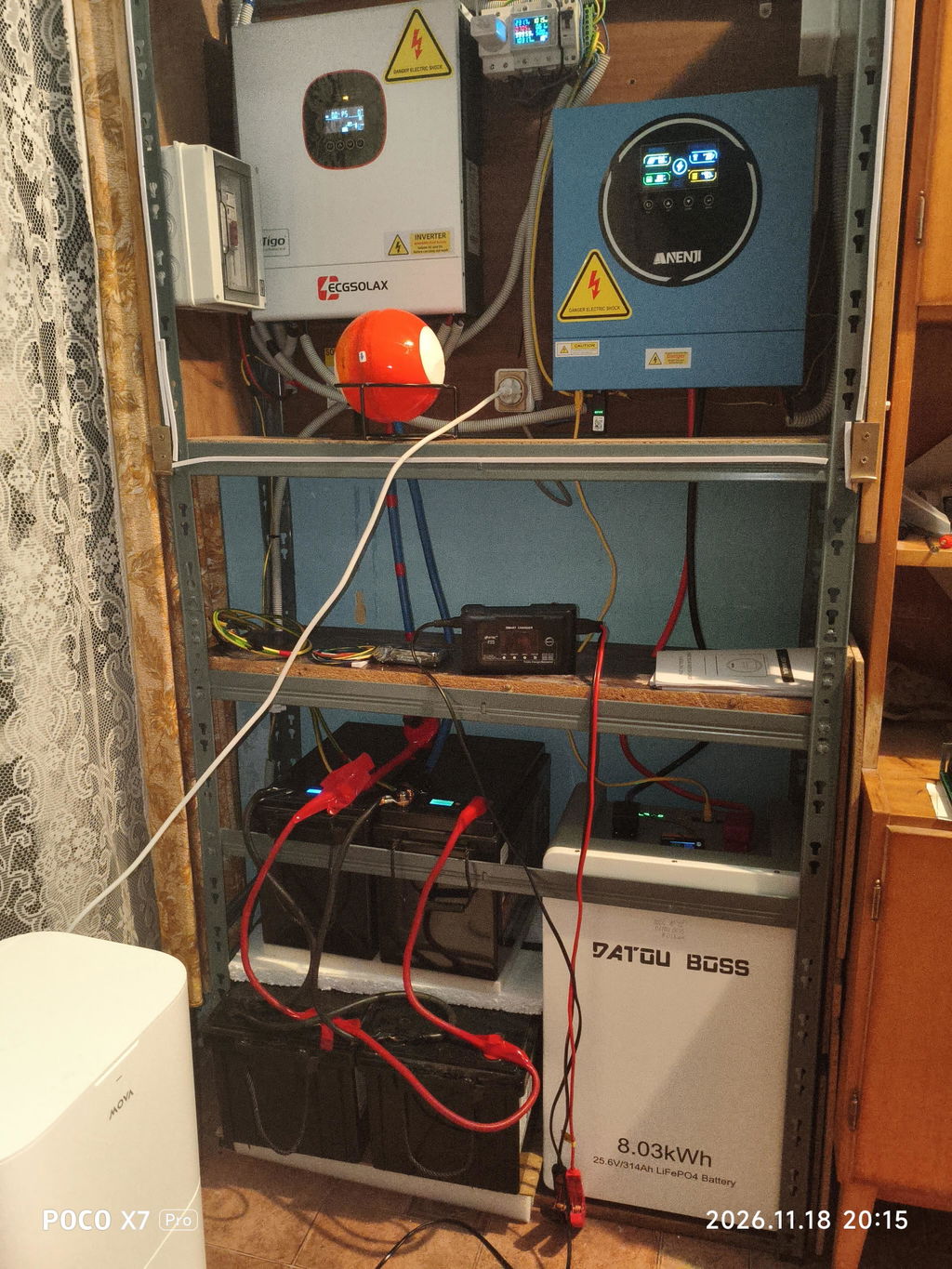
In a home energy system, the inverter can connect rooftop solar panels to a 48V battery bank and selected AC circuits. During the day, solar power can supply household loads and charge the battery. At night or during an outage, stored energy can support lighting, refrigeration, networking equipment, communications, and other priority loads through the backup output.
Off-grid cabins and remote properties
For a cabin or remote property, the inverter can coordinate solar power, battery storage, and an external AC source. Its 230V output is suitable for systems designed around common European AC voltage, while the battery-free function may provide additional flexibility during commissioning or certain daytime solar configurations.
RV and mobile energy systems
The product page lists RV-related applications and the high PV input makes it relevant to larger mobile energy systems. In an RV, the installation must account for available compartment space, ventilation, vibration, cable protection, battery weight, and the vehicle's AC distribution design. The inverter should be firmly mounted and protected from moisture beyond the conditions covered by its IP54 rating.

Key Functions and Specifications
| Item | Official product-page or manual information | Why it matters |
|---|---|---|
| Product type | 48V solar hybrid inverter | Combines inverter, solar charging, battery management, and AC-source functions |
| Rated inverter power | 6200W | Defines the continuous AC output platform; confirm surge limits for motor loads |
| PV input power | 8500W maximum | Allows a larger PV array, subject to voltage and current limits |
| AC output | 230V AC; the manual also lists 220/230/240V settings | Designed for compatible residential, off-grid, and mobile AC systems |
| Solar charger | 120A MPPT | Tracks the solar array operating point and manages battery charging |
| MPPT voltage range | Approximately 60–500V DC in the technical datasheet | Determines how PV modules can be connected in series |
| Maximum PV voltage | 500V DC | Solar-string open-circuit voltage must remain below this limit |
| Maximum PV current | 27A | Limits the combined current of parallel PV strings |
| Battery system | 48V; compatible settings depend on battery chemistry | Designed for a higher-voltage storage architecture |
| Battery-free operation | Supported according to the official product page | May allow selected solar and AC configurations without a battery installed |
| Protection rating | IP54 dust and water protection | Provides protection for suitable indoor or sheltered installations; it is not a license for exposed outdoor mounting |
| Monitoring | Compatible with WiFi 04 | Enables mobile app remote monitoring and control when the module is installed |
| Protection functions | BMS protection; the manual also describes overload, over-temperature, short-circuit, and PV-input protection | Adds safeguards but does not replace external DC and AC protection |
| Warranty | 5-year warranty shown on the official product page | Provides long-term coverage subject to the seller's warranty terms |
What Does IP54 Protection Mean?
IP54 indicates protection against limited dust ingress and water splashes from different directions. It does not mean the inverter is waterproof or suitable for direct rain, flooding, condensation, or an unprotected exterior wall. Install the unit in a clean, dry, ventilated, and accessible location that follows the manual's clearance and temperature requirements.
In a garage, utility room, cabin power room, or RV service compartment, keep the inverter away from direct water sources and provide enough space for heat dissipation. Do not block ventilation openings or place the unit beside materials that could be damaged by heat.
How Should the Inverter Be Matched With a Battery?
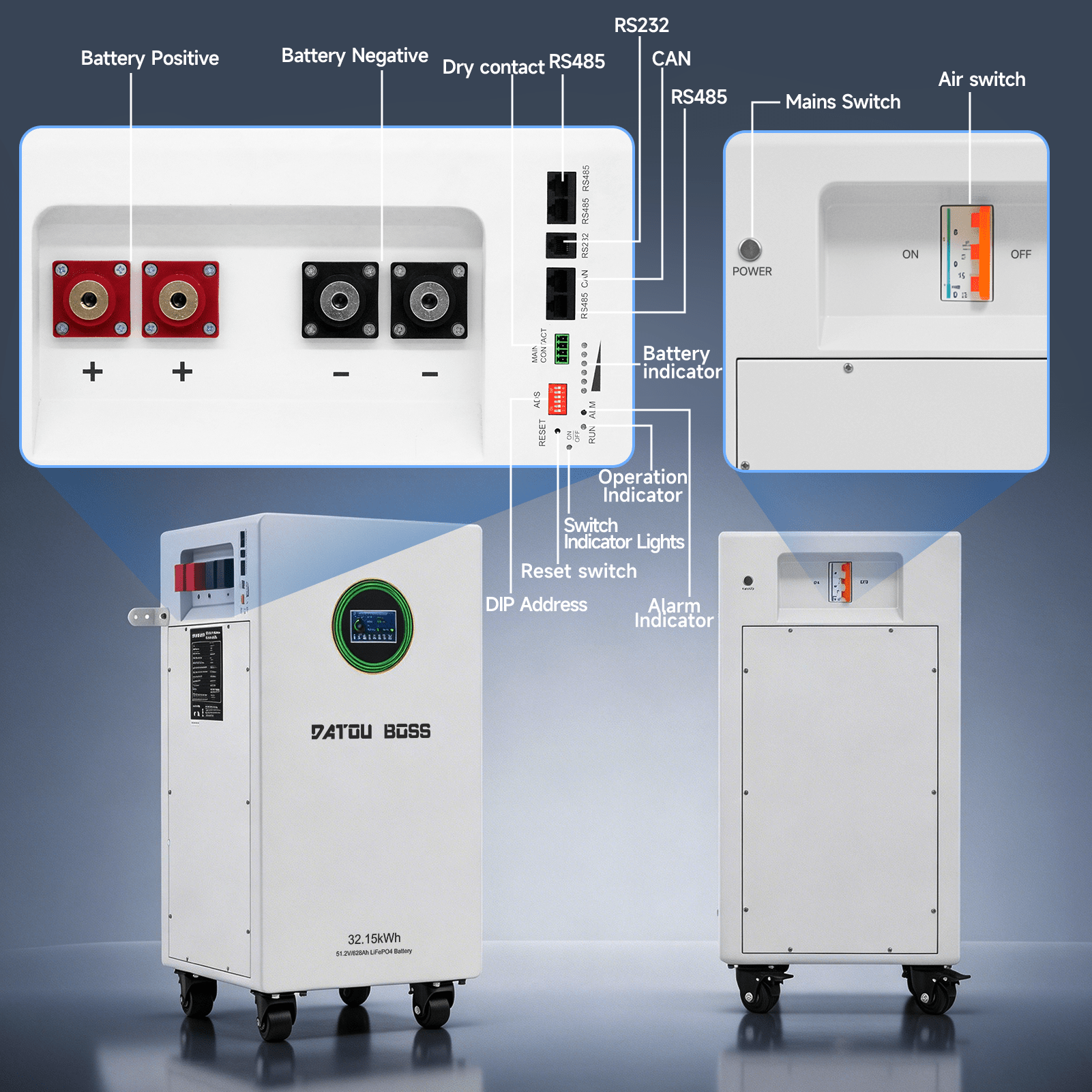
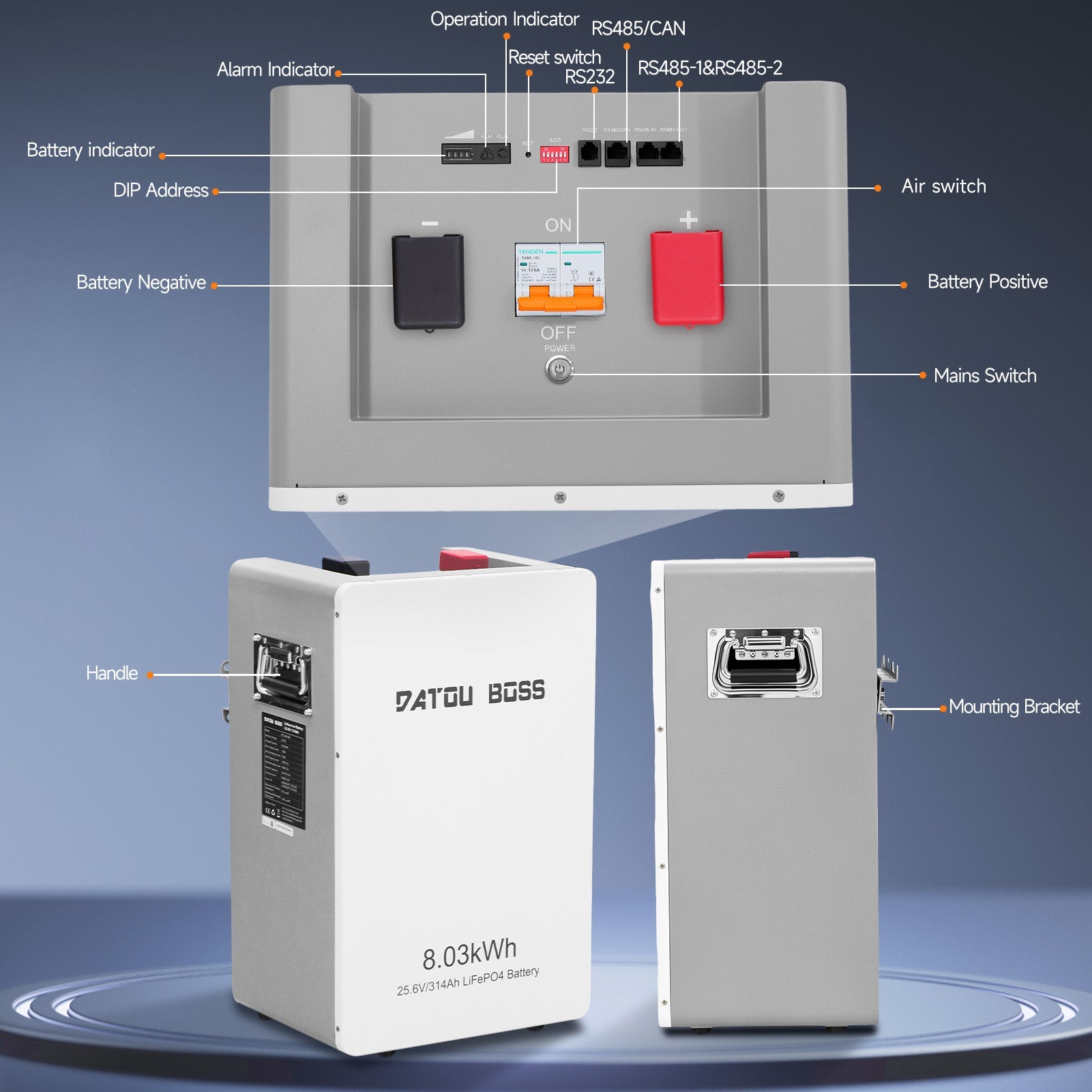
The inverter's 6200W output and 120A charging capability can place substantial demands on a battery bank. Select a 48V battery or battery bank that can support the required continuous discharge current, charging current, surge demand, and BMS communication method.
- Confirm the battery's nominal voltage and permitted charge-voltage range;
- Check the battery's continuous and peak discharge current;
- Confirm whether CAN, RS485, or another BMS communication method is required;
- Set the inverter's charge and low-voltage parameters according to the battery manual;
- Install a correctly rated battery fuse, disconnect, and cable set;
- Verify that the total battery capacity is appropriate for the expected load and backup duration.
Seven Checks Before Installation
- Confirm the exact SKU: verify SP-DT-4862FL-01-EU and obtain the latest version-specific manual;
- Confirm the power ratings: distinguish 6200W inverter output, 6500W PV-to-AC labeling, and 8500W maximum PV input;
- Check the PV design: stay within the 60–500V MPPT range, 500V maximum input voltage, 27A input-current limit, and 8500W PV limit;
- Match the battery: use a compatible 48V battery system and confirm BMS communication before enabling closed-loop operation;
- Install external protection: provide correctly rated DC isolators, fuses, breakers, surge protection, and AC protection;
- Plan ventilation: keep the inverter in a dry, clean, accessible location within the manual's operating-temperature range;
- Set up monitoring: if remote access is required, confirm compatibility with the WiFi 04 module and test the app after commissioning.
Build a More Flexible Solar Energy System
The DATOUBOSS 48V 6200W Hybrid Solar Inverter is designed for customers who want one coordinated platform for PV generation, battery storage, grid or generator support, and backup loads. With up to 8500W of PV input, 120A MPPT charging, 230V AC output, battery-free operation, IP54 protection, BMS safeguards, and optional WiFi 04 monitoring, it can fit home solar, off-grid cabins, RVs, and other high-capacity energy systems.
The most important step is correct system matching. Confirm the exact manual, calculate the PV string voltage and current, select a battery with suitable continuous power, and install the required protection equipment. When these details are designed together, the inverter can become the central control point for a more resilient and manageable solar power system.
Product source: DATOUBOSS 48V 6200W IP54 Hybrid Solar Inverter official product page
Product manual: DT-4862FL User Manual