Solar panels can generate valuable electricity during the day, but without the right control system, much of that energy may be used at the wrong time—or lost when the grid goes down. A hybrid inverter brings solar generation, battery storage, utility power, and household loads into one coordinated energy system.
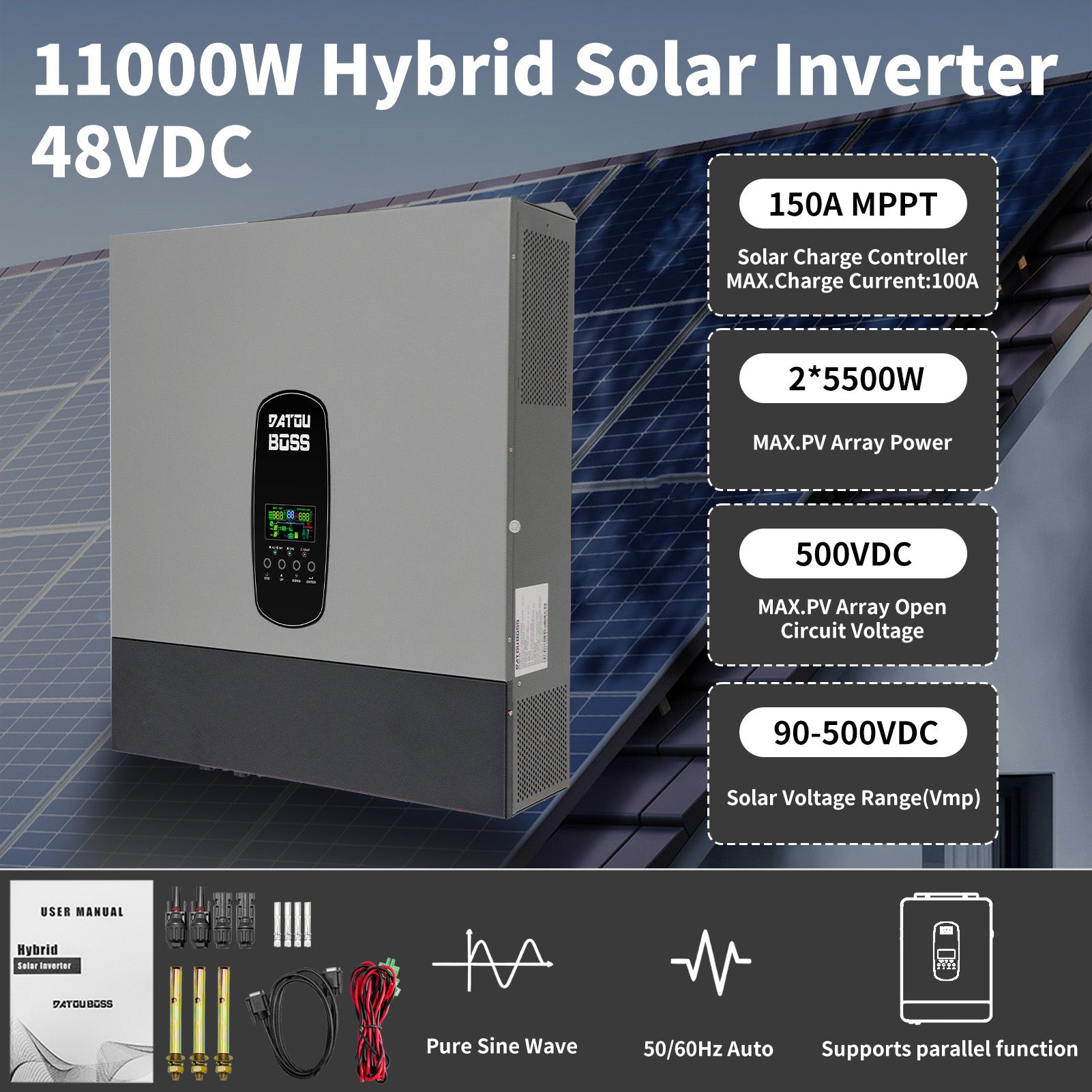
The DATOUBOSS 48V 11kW Hybrid Inverter is positioned as an all-in-one solution for home backup power, off-grid systems, solar storage, RVs, yachts, agriculture, and other applications that need flexible energy management. It combines pure sine wave output, MPPT solar charging, 48V battery support, parallel expansion, and multiple protection functions in one system.

Why Does a Hybrid Inverter Matter?
A conventional inverter mainly converts DC electricity into AC electricity. A hybrid inverter does much more: it monitors several energy sources and determines how they should work together based on solar production, battery status, grid availability, and household demand.
- Solar-first operation: use available solar energy during the day and reduce reliance on the grid;
- Battery storage: save excess solar energy for nighttime use or cloudy periods;
- Grid support: draw from the utility when solar and battery energy are not sufficient;
- Backup power: keep selected loads running during an outage;
- Off-grid operation: combine solar panels, batteries, and optional generator input where grid power is unavailable.

Why Build Around a 48V Battery System?
For higher-power energy storage, a 48V architecture can help keep battery-side current more manageable than a lower-voltage design delivering the same power. This can simplify cable sizing, reduce current stress on terminals, and make it easier to build a larger storage bank.
The DATOUBOSS inverter is designed for a 48V DC battery system and the official technical table lists compatibility with lead-acid or lithium batteries. It also lists adjustable constant-charge voltage, float-charge voltage, and low-DC cut-off settings. When using a LiFePO4 battery, check the battery management system, charging voltage, and communication method before commissioning the system.
Where Can This Inverter Be Used?
Home solar and backup power
Homeowners can connect rooftop solar panels to the MPPT input, use a 48V battery bank for storage, and connect the inverter to selected AC loads. Solar energy can supply loads during the day, charge the battery with surplus power, and provide backup energy when the grid is unavailable.
Off-grid homes and remote cabins
In areas with limited grid access, the inverter can combine solar energy, battery storage, and backup generation. The official product page also mentions diesel-generator input, which can add another layer of energy security to an off-grid system.
RVs, boats, and mobile energy systems
The product page lists residential, RV, and yacht applications. For mobile installations, pay close attention to weight, mounting, ventilation, vibration, battery capacity, and whether the AC output matches the vehicle or vessel’s electrical system.
Agriculture, commercial loads, and emergency power
Pumps, communications equipment, surveillance systems, lighting, and small commercial loads may all benefit from stable backup power. Multiple inverters can be combined as the system grows, but parallel and three-phase installations should be designed and commissioned by qualified professionals.
Key Functions and Specifications
| Item | Official product-page information | Why it matters |
|---|---|---|
| Product positioning | 48V 11kW hybrid solar inverter | Designed to manage solar, battery, grid, and backup energy in one system |
| Battery voltage | 48V DC | Suitable for 48V lead-acid or lithium battery systems |
| Output waveform | Pure sine wave | Suitable for computers, appliances, control equipment, and other AC loads |
| AC output | 220/230/240V; 50/60Hz adaptive | Supports common AC systems in different regions |
| Solar charging | MPPT; the product page describes dual MPPT | Helps the PV array operate efficiently as sunlight changes |
| PV voltage | Technical table: MPPT range 80–500V; maximum PV input voltage 500V DC | Solar-panel strings must stay within both operating and open-circuit voltage limits |
| Parallel capability | 2–9 units for single-phase operation; 3–9 units for three-phase operation | Allows the system to grow as power demand increases |
| Battery-free operation | Supported according to the product page | May allow solar and AC loads to operate before a battery bank is added, subject to configuration |
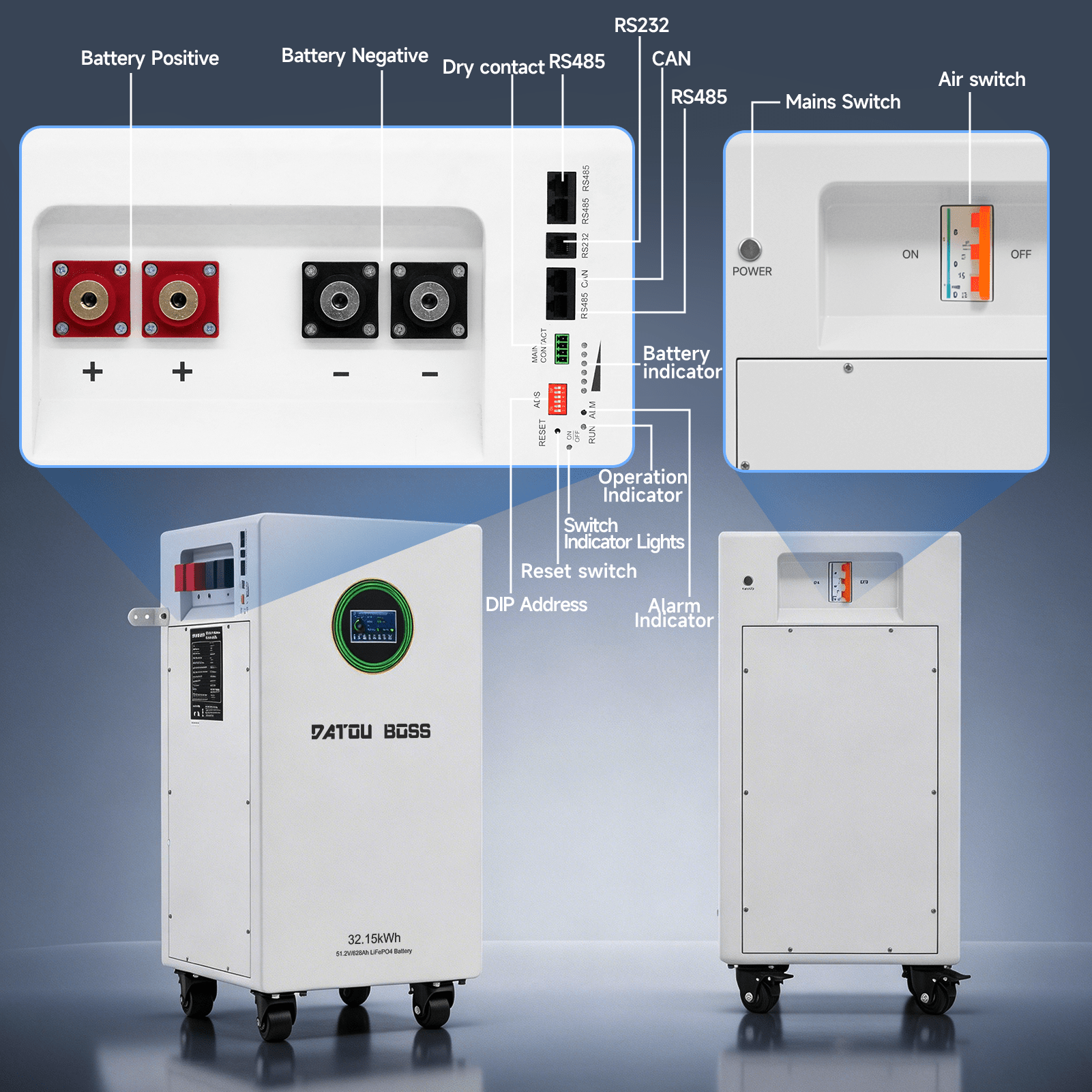
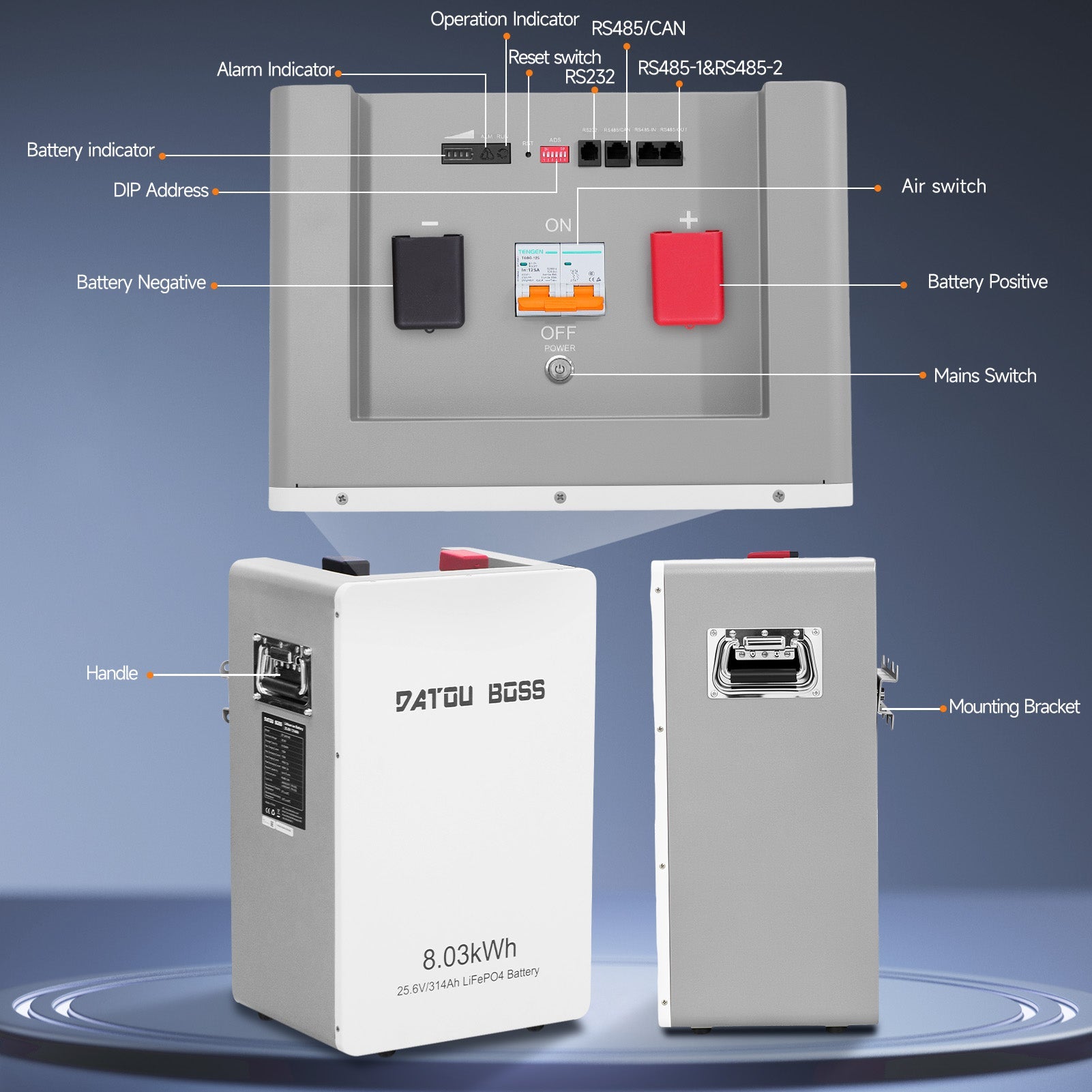
| Communication | RS232, RS485, BMS, dry contact, parallel port, optional WiFi card | Supports battery communication, system control, and remote monitoring |
| Protection | Overload, over-temperature, short circuit, battery overcharge/over-discharge, fan lock | Adds layers of protection but does not replace external fuses and breakers |
| Display | LCD for input/output voltage, frequency, load percentage, and fault codes | Makes local monitoring and troubleshooting easier |

How Should the Solar Array Be Matched?
MPPT technology continuously searches for a suitable operating point as solar output changes. When designing the PV array, do not look only at total panel wattage. Also check:
- The maximum operating voltage and open-circuit voltage after panels are connected in series;
- The maximum current after parallel strings are combined;
- Whether cold-weather open-circuit voltage could rise beyond the inverter limit;
- Whether total PV power stays within the confirmed limit for the exact inverter version;
- Whether panels with different orientations or shading conditions should use separate MPPT channels.
The technical table lists a maximum PV input voltage of 500V DC, an MPPT range of 80–500V, and peak MPPT tracking efficiency of 99.9%. Always design the array from the latest manual and the actual panel electrical data rather than relying only on the headline power number.
What Should You Know About Parallel and Three-Phase Expansion?
When one inverter cannot meet the required load, multiple units may be connected in parallel. The official page states that the series supports 2–9 units for single-phase operation and 3–9 units for three-phase systems.
Parallel expansion is not simply a matter of connecting AC outputs together. The system should use compatible units and firmware, dedicated parallel communication cables, correct master/slave settings, coordinated output parameters, and suitable protection. For three-phase systems, each inverter’s phase position and load distribution must also be configured correctly.
Professional installation recommended: Parallel operation, three-phase systems, generator integration, and modifications to a household distribution board should be designed and commissioned by a qualified electrical installer.
Seven Checks Before Installation
- Confirm the SKU: verify that the purchased unit is SP-LX-DT4811B-48V-C-EU and obtain the current version-specific specifications;
- Confirm power ratings: verify rated output, peak power, maximum PV input, and charging current for the actual version;
- Check battery compatibility: confirm the 48V battery voltage range, BMS communication, and charging settings;
- Install DC protection: use correctly rated battery fuses, breakers, isolators, and cables;
- Install AC protection: protect grid, load-output, and generator-input circuits according to local electrical requirements;
- Provide ventilation: the technical table lists an operating range of approximately -10°C to 50°C, so avoid hot, sealed installation spaces;
- Plan monitoring: if app-based monitoring is required, confirm compatibility between the WiFi 04 module and the exact inverter version.
Turn Solar Generation into a Complete Energy System
For homeowners who want to use more of their solar energy, reduce grid dependence, or prepare for outages, a hybrid inverter is more than a DC-to-AC converter. It is the control center that organizes solar power, battery storage, utility electricity, and backup energy into one manageable system.
The DATOUBOSS 48V 11kW Hybrid Inverter combines a 48V battery architecture, pure sine wave output, MPPT solar charging, battery-free operation, parallel expansion, three-phase support, and multiple protection functions. These features make it relevant to home storage, off-grid properties, RVs, boats, agricultural sites, and emergency power systems.
Before installation, the most important step is to confirm the latest technical data for the exact SKU—especially rated output, PV input power, MPPT current, parallel conditions, and battery communication requirements. Once those values are confirmed, the inverter can be matched more accurately with the home’s loads, solar array, and battery bank.
Product source: DATOUBOSS 48V 11kW Hybrid Inverter official product page