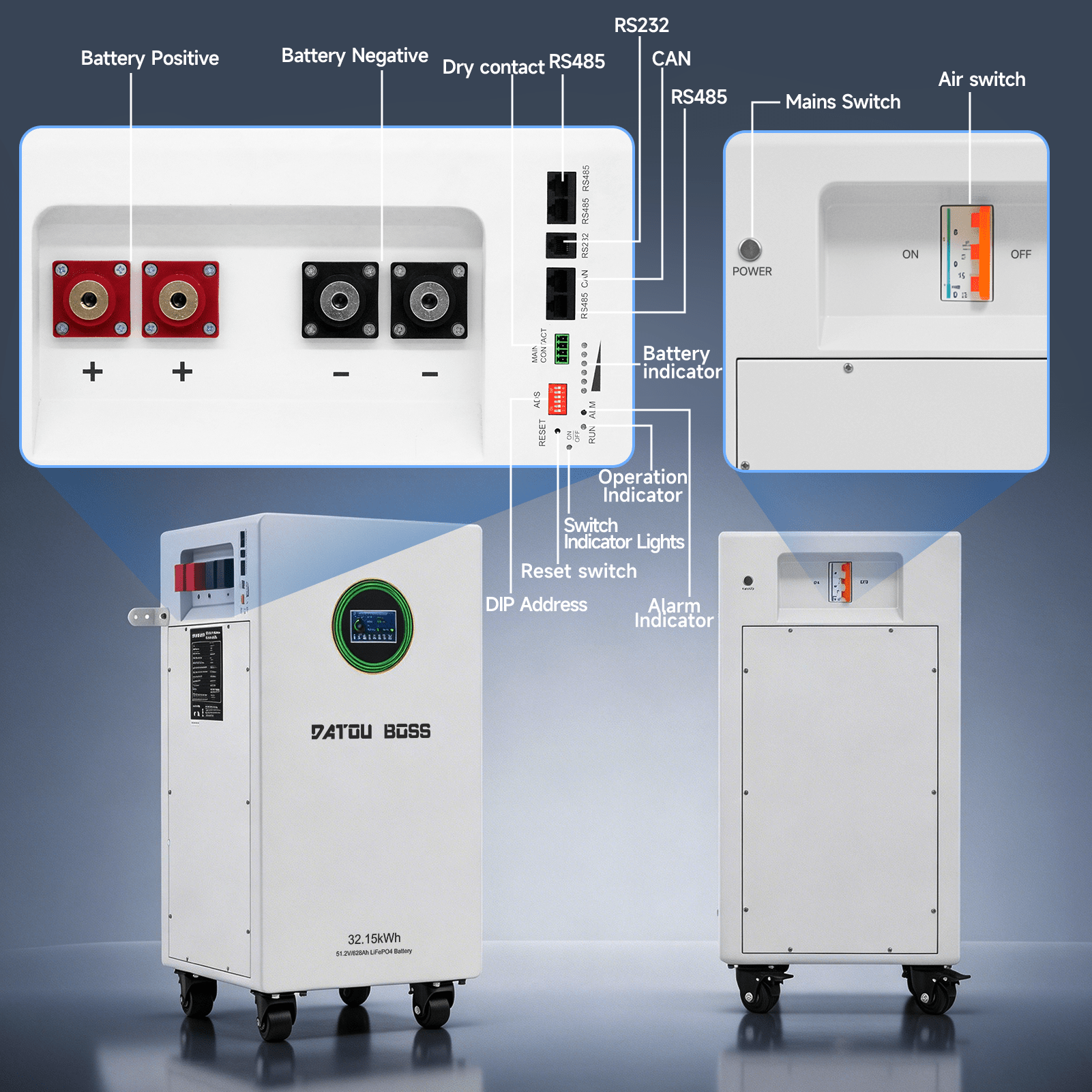
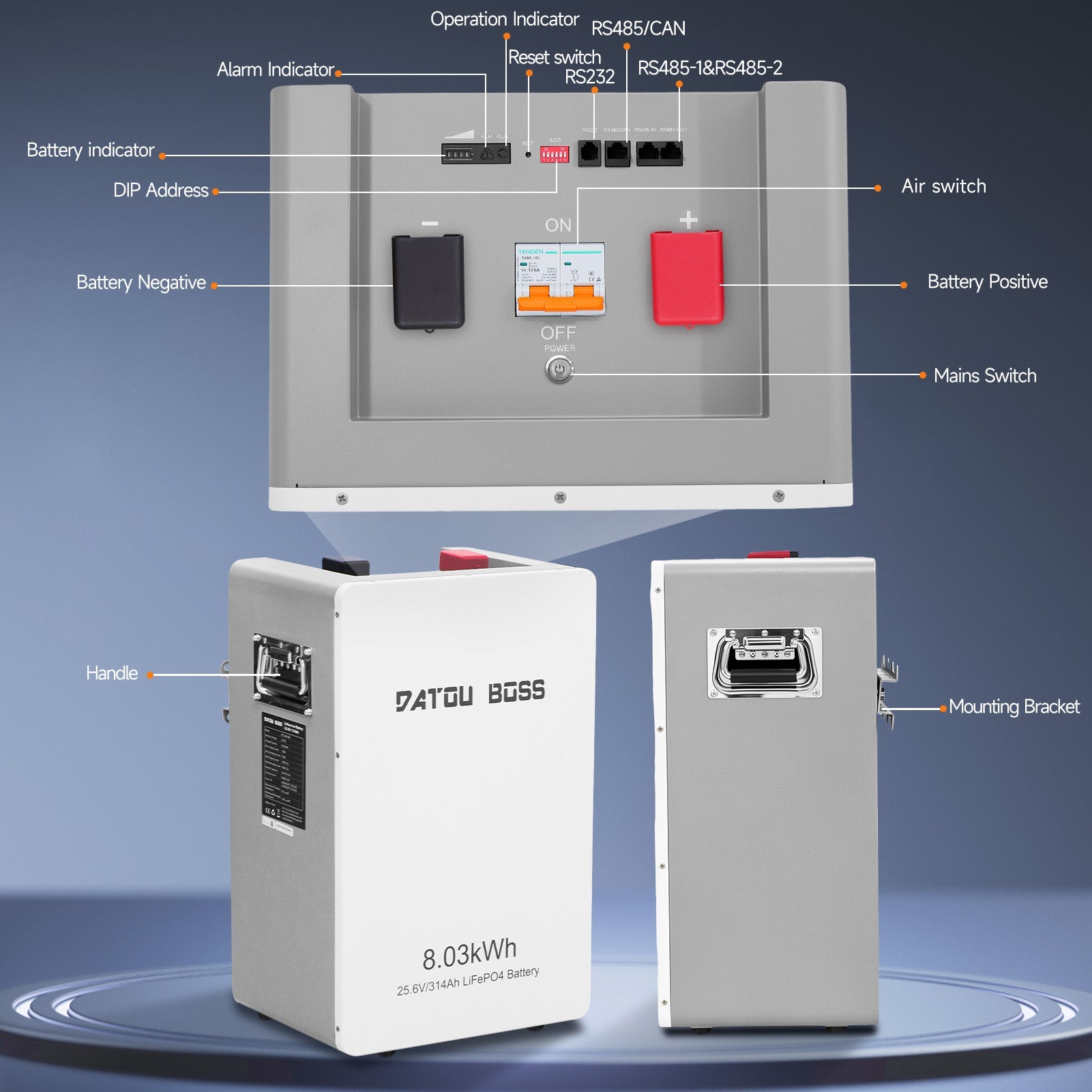
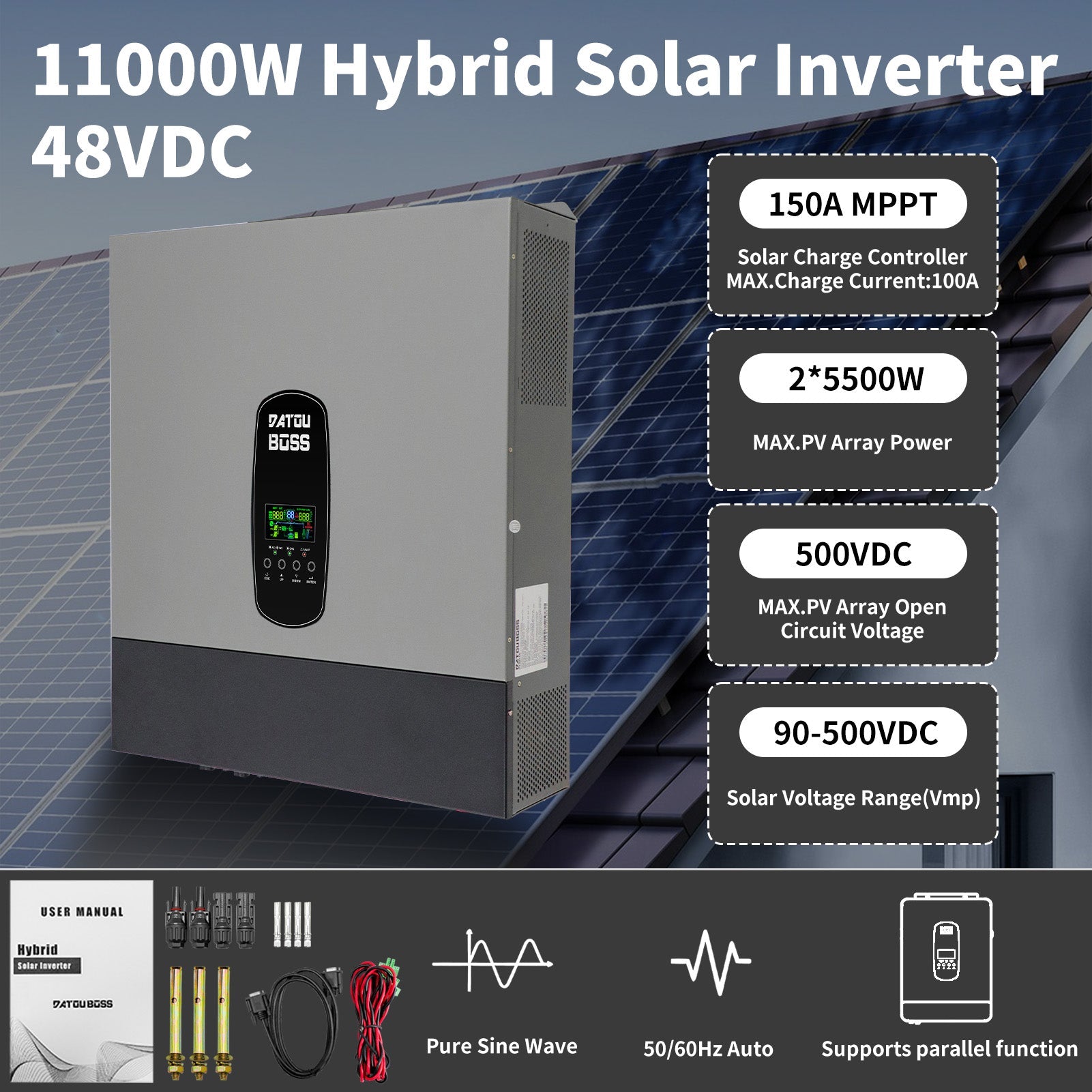
For homes, RVs, workshops, and other high-demand applications, a small inverter may not provide enough power for modern electrical loads. Refrigerators, pumps, heating equipment, kitchen appliances, tools, and communication devices can all compete for power at the same time. The DATOUBOSS 48V 12000W Hybrid Inverter system combines a high-power off-grid inverter with a 628Ah LiFePO4 battery, solar charging, LCD touch-screen monitoring, and a wheeled all-in-one design for large-capacity energy storage.
1. What Can a 12,000W Inverter Power?
The main advantage of a 12,000W inverter is the ability to support multiple household or mobile loads at the same time. The actual load must always remain within the product's operating limits, but the rated output gives users more flexibility than a small backup power station.
| Example Load | Typical Use | What to Check |
|---|---|---|
| Refrigerator or freezer | Continuous or cycling operation | Compressor startup current |
| Water pump | Short, high-power starts | Motor surge and running power |
| Kitchen appliances | Cooking, heating, or food preparation | Total simultaneous demand |
| Workshop tools | Intermittent operation | Motor or tool startup power |
| RV and home electronics | Daily AC loads and charging | Power factor and operating duration |
The JC-1232 is specified with a 12,000W rated output and a 24kVA peak power rating. These figures help with planning, but they do not mean every load can be connected without checking its startup behavior, circuit protection, wiring, and installation requirements.
2. How Much Energy Does the 628Ah LiFePO4 Battery Store?
The product uses a 48V-class LiFePO4 battery system with a stated capacity of 628Ah. A simple planning estimate can be made from voltage and amp-hour capacity:
48V × 628Ah ≈ 30.1kWh
This is an approximate calculation based on a nominal 48V value. The actual usable energy depends on the battery's operating voltage, BMS settings, discharge limits, inverter efficiency, load profile, temperature, and the reserve selected by the user.
LiFePO4 chemistry is commonly selected for stationary and mobile storage because it offers a stable battery platform and a high usable-energy potential. The product page specifies a cycle life of at least 8,000 cycles, with 70% state of health remaining at the end-of-life test condition of 25°C and 0.5C charge and discharge.
3. How Does the Solar Charging System Work?
The inverter includes two MPPT trackers. MPPT, or maximum power point tracking, adjusts the operating point of a solar array so the inverter can collect energy efficiently as sunlight and panel voltage change.
| Solar Input Specification | Product Rating |
|---|---|
| MPPT tracker count | 2 |
| Maximum PV open-circuit voltage | 500V DC |
| MPPT operating voltage range | 60–450V DC |
| Maximum PV charging power | Up to 15,000W with dual PV input |
| Maximum MPPT tracking efficiency | 99.9% |
| PV charging efficiency | 94% |
Two MPPT channels can make it easier to design an array with different roof orientations or separate strings, provided the panel voltage, current, cable size, disconnects, and local electrical requirements are correctly matched. The maximum open-circuit voltage must not be exceeded, especially during cold-weather conditions when PV voltage can rise.
4. What Does the All-in-One System Include?
A conventional energy-storage installation may require separate battery cabinets, an inverter, a monitoring screen, communication cables, and additional interconnection work. The JC-1232 brings the main energy-storage components together in one product enclosure.
The system uses an LCD display and LED status indicator to present operating information locally. CAN and RS485 communication interfaces are also provided for compatible monitoring and control equipment.
5. How Fast Can It Transfer to Backup Power?
For applications where continuity matters, the transfer time is an important part of system planning. The product specifications list a transfer time of approximately 10 milliseconds in UPS mode and 20 milliseconds in generator mode.
This can help reduce interruption for selected electronics, but transfer performance depends on the connected load, wiring, operating mode, and the requirements of the equipment being powered. Sensitive or safety-critical devices should be checked against the manufacturer's backup-power requirements before installation.
6. How Should the Inverter Be Sized for a Real Load?
Start by listing every device that may operate at the same time. For each load, record its running power, expected operating hours, and starting or surge demand. The total running load can then be estimated as follows:
For example, a home backup schedule might include a refrigerator, lighting, networking equipment, a water pump, and selected kitchen appliances. The system should be checked against both the combined running power and the highest expected startup event.
| Planning Item | Why It Matters |
|---|---|
| Continuous load | Must remain within the 12,000W rated output |
| Starting surge | Motors and compressors can draw more power at startup |
| Daily energy use | Determines how long the battery can support the loads |
| Solar production | Determines how quickly the battery can be recharged |
| Installation environment | Temperature, humidity, ventilation, and clearances affect operation |
7. What Protection and Installation Details Matter?
The product is specified as an IP20 all-in-one energy-storage system. It is therefore intended for a suitable protected installation environment rather than direct exposure to rain, splashing water, or outdoor weather.
Installation should include correctly sized AC and PV disconnects, overcurrent protection, grounding, suitable conductors, and an installation method that follows local electrical codes. The product's input is specified as L + N + PE, with a rated input voltage of 220/230/240V AC and an input range of 170–280V AC.
8. Where Is This 12kW Energy Storage System a Good Fit?
Home Backup
The large battery capacity can support selected household circuits during an outage, while the 12kW inverter rating provides more headroom for multiple appliances than a small portable power station.

RV and Mobile Energy Storage
The integrated enclosure, detachable design, LCD touch screen, and wheels can simplify movement and system monitoring where a large-capacity mobile power source is required. Weight, access, tie-downs, ventilation, and vehicle electrical regulations should be assessed before mobile installation.

Solar Self-Consumption
Solar energy can be used during the day and stored for later use. The two MPPT inputs allow a more flexible PV arrangement when the array is designed within the specified voltage and current limits.
Workshops and High-Demand Loads
Tools, pumps, refrigeration, and other equipment may benefit from a high-power inverter, provided their running and startup requirements are compatible with the system.

9. Why Choose an Integrated LiFePO4 Storage System?
- High output: 12,000W rated AC output with a 24kVA peak rating.
- Large battery capacity: 628Ah LiFePO4 storage in a 48V-class system.
- Solar integration: Two MPPT trackers with up to 15,000W dual-input PV charging.
- Local monitoring: LCD display and LED status indication.
- Flexible communication: CAN and RS485 interfaces for compatible systems.
- Long cycle-life specification: At least 8,000 cycles under the stated test condition.
- Practical handling: Detachable construction and wheels for easier positioning.
The system is supplied with a 5-year warranty according to the product page. It is also listed with 30-day free returns and free shipping, subject to the seller's current terms and the destination.
Explore the DATOUBOSS 48V 12000W Hybrid Inverter System
For home backup, RV power, solar self-consumption, and high-demand off-grid applications, the DATOUBOSS JC-1232 combines a 12,000W inverter, a 628Ah LiFePO4 battery, dual MPPT solar charging, LCD touch-screen monitoring, and a wheeled all-in-one design. Review the electrical specifications and installation requirements before selecting the system for your project.
View Product Details